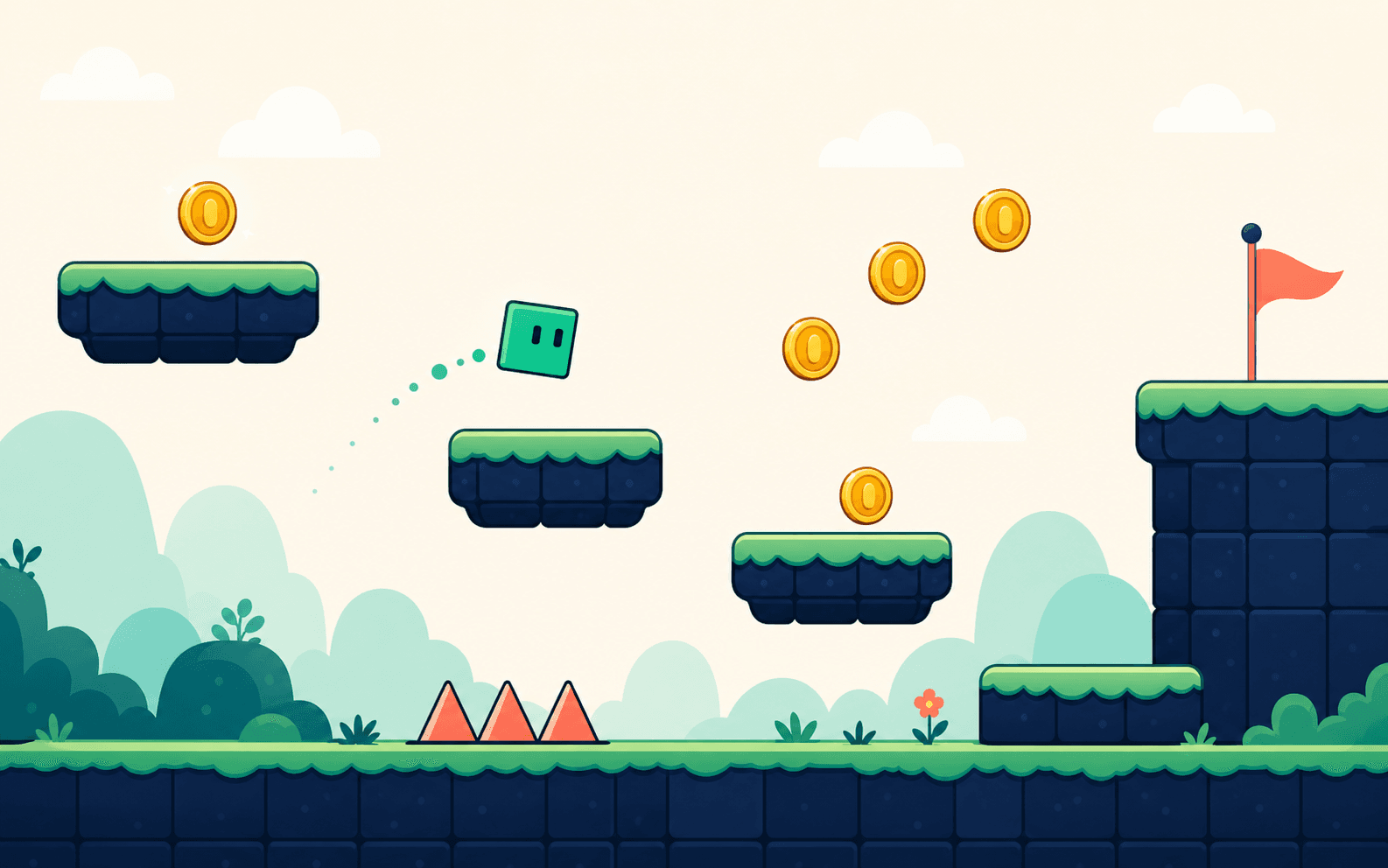
Platform sketch
A lightweight code-first lane for drawing, movement, and quick two-dimensional game ideas.
Describe your idea in plain words, click your world into shape, and smash RUN. GameCoder's robot co-builder turns imagination into a real, playable, shareable game.
Coin Quest looks great! Your player can already run and jump. What next?
make the coin spin when the player grabs it
Done — grab the coin and watch it spin!
Coin Quest looks great! Your player can already run and jump. What next?
make the coin spin when the player grabs it
Done — grab the coin and watch it spin!
How it works
You make the creative calls — Maady sweats the semicolons.
Your idea
Tell Maady the game in plain words. It asks smart questions, then writes the real code — and shows you exactly what changed.
“make a cat that dodges flying tacos”
Your design
Click anything on the stage to move it, resize it, and give it powers — spin, bounce, arrow keys. You are the art director here.
“drag the coin, give it Spin, done”
Your game
Smash RUN and play it on the spot. When it feels right, publish to your class library and friends play in the browser.
“send it to the class library — one click”
Starting worlds
Every starter is a real, remixable game — pick a world and make it yours.
A lightweight code-first lane for drawing, movement, and quick two-dimensional game ideas.
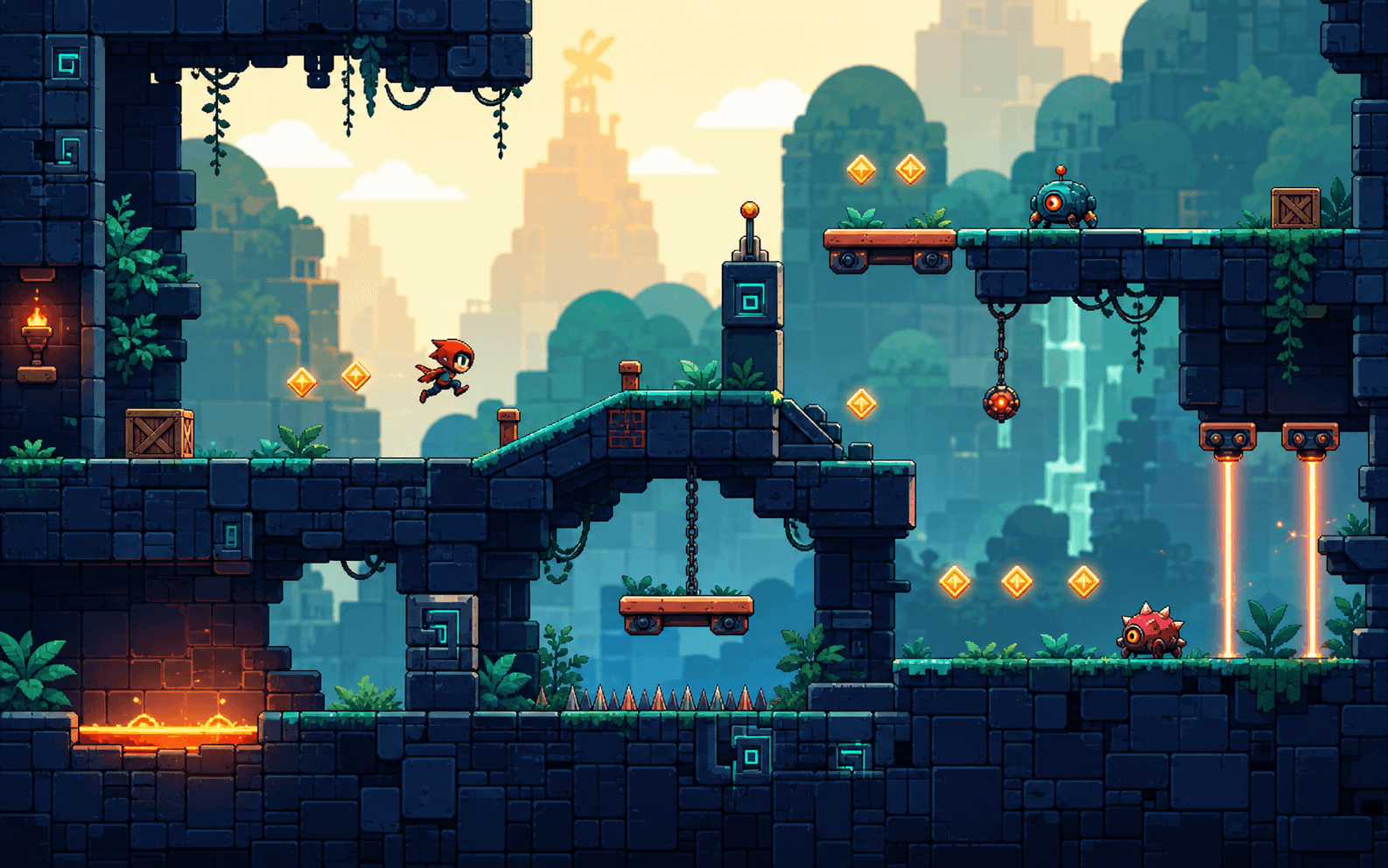
An advanced two-dimensional lane for movement, collisions, and richer game-object behavior.
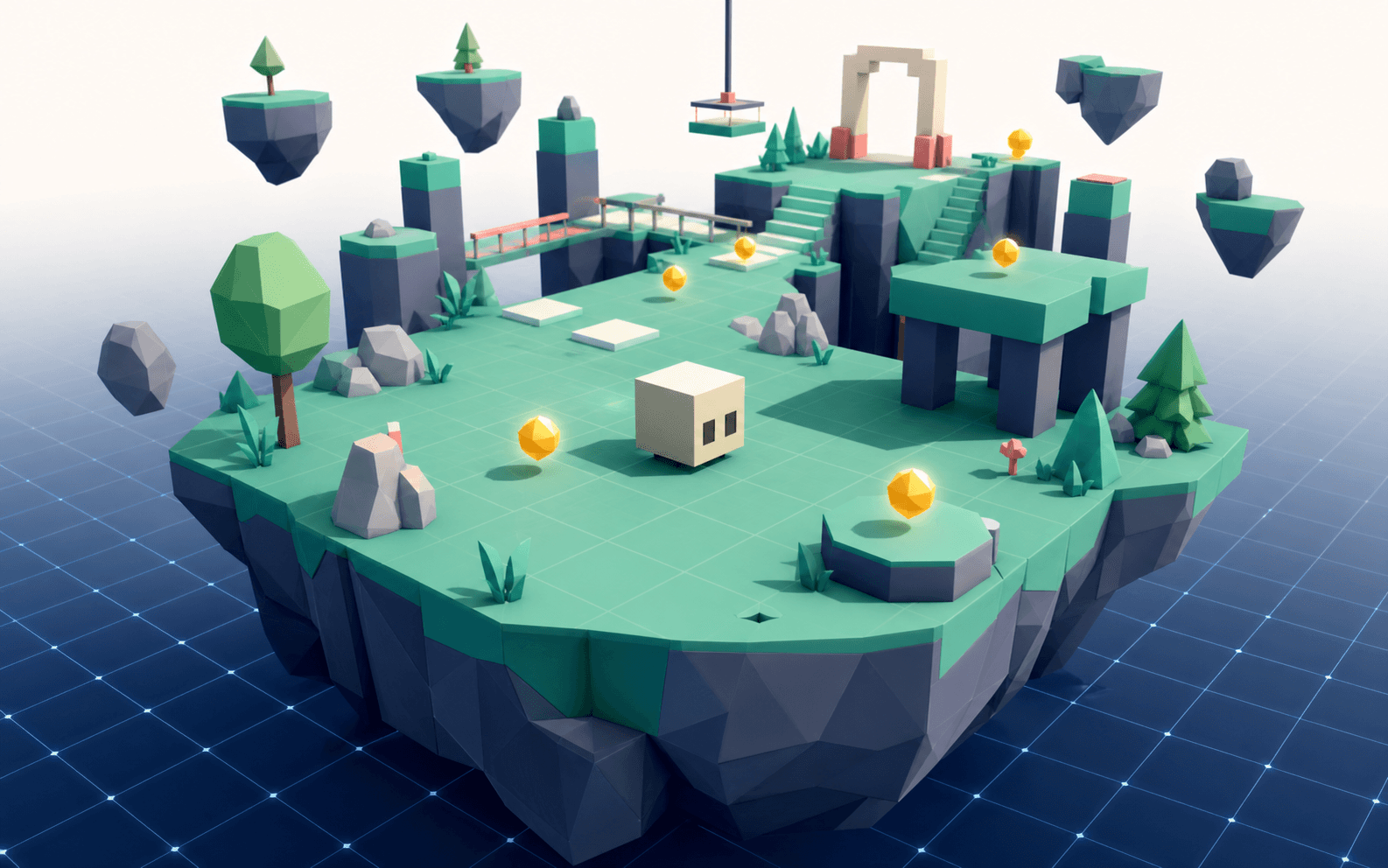
A code-first three-dimensional lane for cameras, depth, materials, and explorable spaces.
Made by students
Real projects from the student library — published with teacher oversight, playable in the browser.
School-first by design
GameCoder pairs the student game studio with the oversight teachers and families need for school use.
What ships today
Questions
Every project starts private. When it is ready, students publish to a signed-in school library — not an anonymous public gallery.
Yes. Projects run on real p5.js, Phaser, or Three.js code, and students can open and edit that code any time.
A web browser. GameCoder runs on Chromebooks, iPads, and shared library computers — nothing to install.
No public social or stranger-contact model is part of the default school rollout.
Teachers and admins can review, unlist, or remove published games, and families can route concerns through the school and the support page.
Ready when you are
Bring the idea — Maady is already warmed up. Describe something ridiculous, see it run, and share it with your class.


